A Method Built on Dismantling
The Museum of Folk Architecture in Sanok operates on a principle that sounds paradoxical: the best way to preserve a historic timber building is to take it apart. Founded in 1958 in the foothills of the Carpathians in southeastern Poland, the Sanok skansen — open-air museum — is among the largest of its kind in the country, and its collection now holds more than one hundred historic structures drawn from the ethnographic regions of Podkarpacie and beyond.
Translocation, the practice of dismantling a building at its original site and re-erecting it elsewhere, is the museum's founding logic. A log farmhouse threatened by road widening, a wooden church abandoned by its shrinking parish, a granary rotting at the sill for want of maintenance — each can be numbered, tagged beam by beam, transported, and rebuilt on ground that the museum controls and tends. What is lost in translocation is context; what is saved is the fabric. Sanok's curators have long argued, and the collection demonstrates, that fabric is what cannot be replaced.
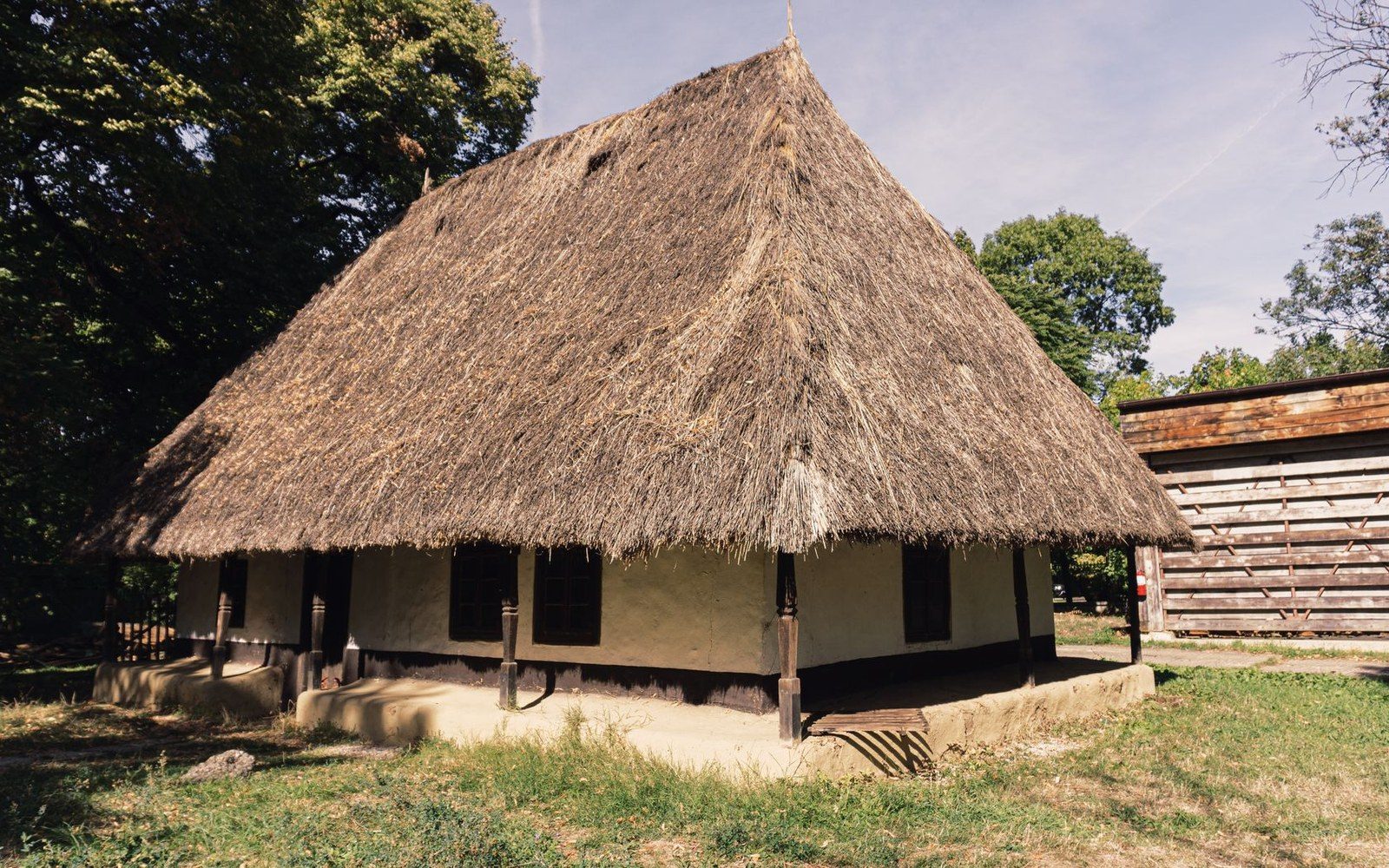
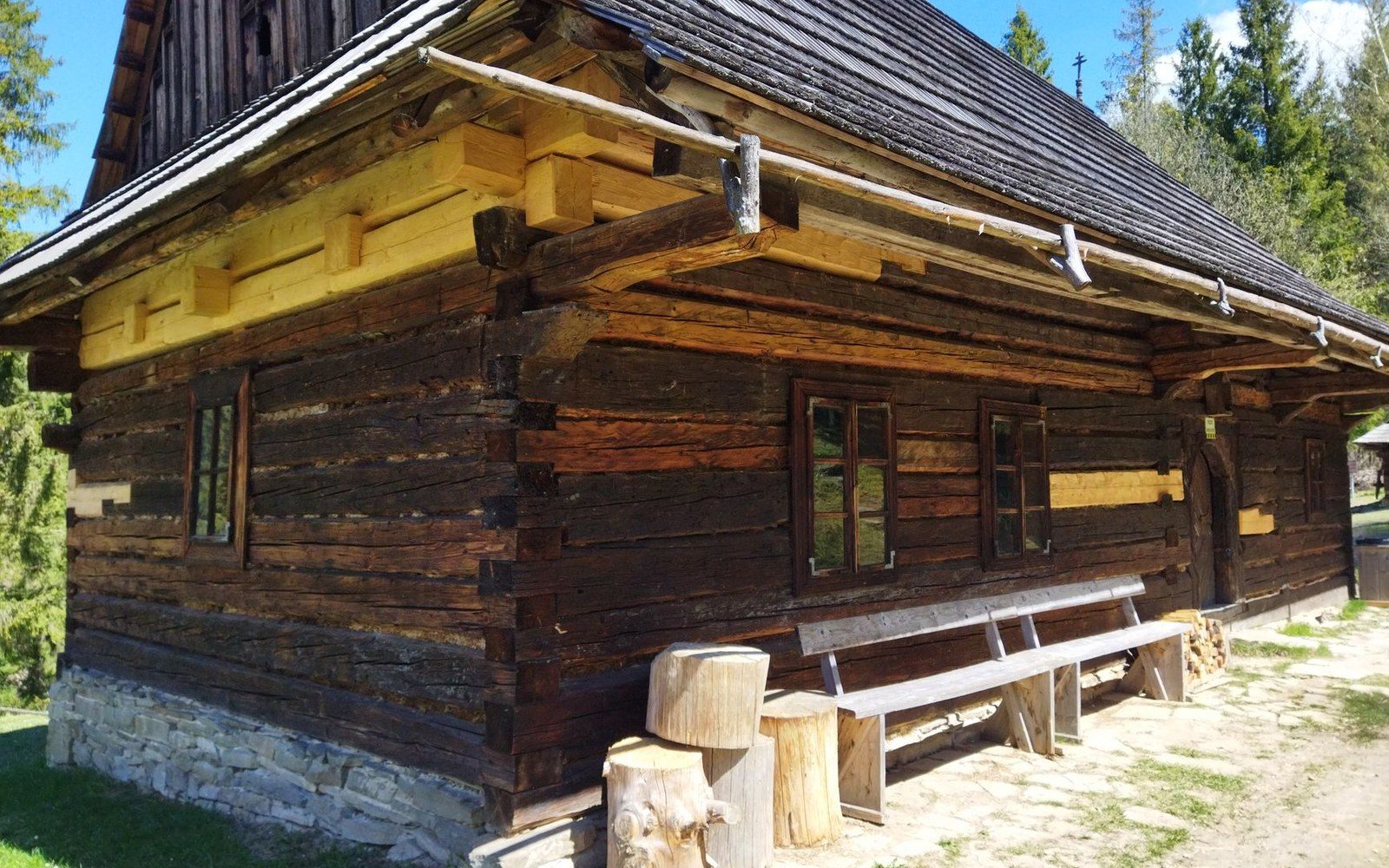
The buildings at Sanok range from modest Lemko and Bojko homesteads to larger ecclesiastical structures, including the timber tserkvas — log-built Orthodox and Greek Catholic churches of the Carpathian region — that characterise this part of Poland's architectural inheritance. Notched-corner log construction, the structural system in which horizontal logs are locked at each corner by interlocking notch cuts, runs throughout the collection. So do shingle roofs, the wood-split covering laid in overlapping courses, which the museum's craftspeople cut and replace using traditional techniques. The result is a working landscape of maintained timber buildings, not a static display.
Why Sanok for Zabłudów
The connection between Sanok and the Zabłudów synagogue reconstruction is not incidental. When Handshouse Studio — the American craft-based organisation led by Rick Brown and Laura Brown — sought a location and institutional partner for the Zabłudów project, Sanok offered something most institutions could not: experienced carpenters working in the same structural tradition, a site already equipped for large-scale timber assembly, and curatorial staff whose day-to-day work involves reading a historic building through its joints and marks rather than through documents alone.
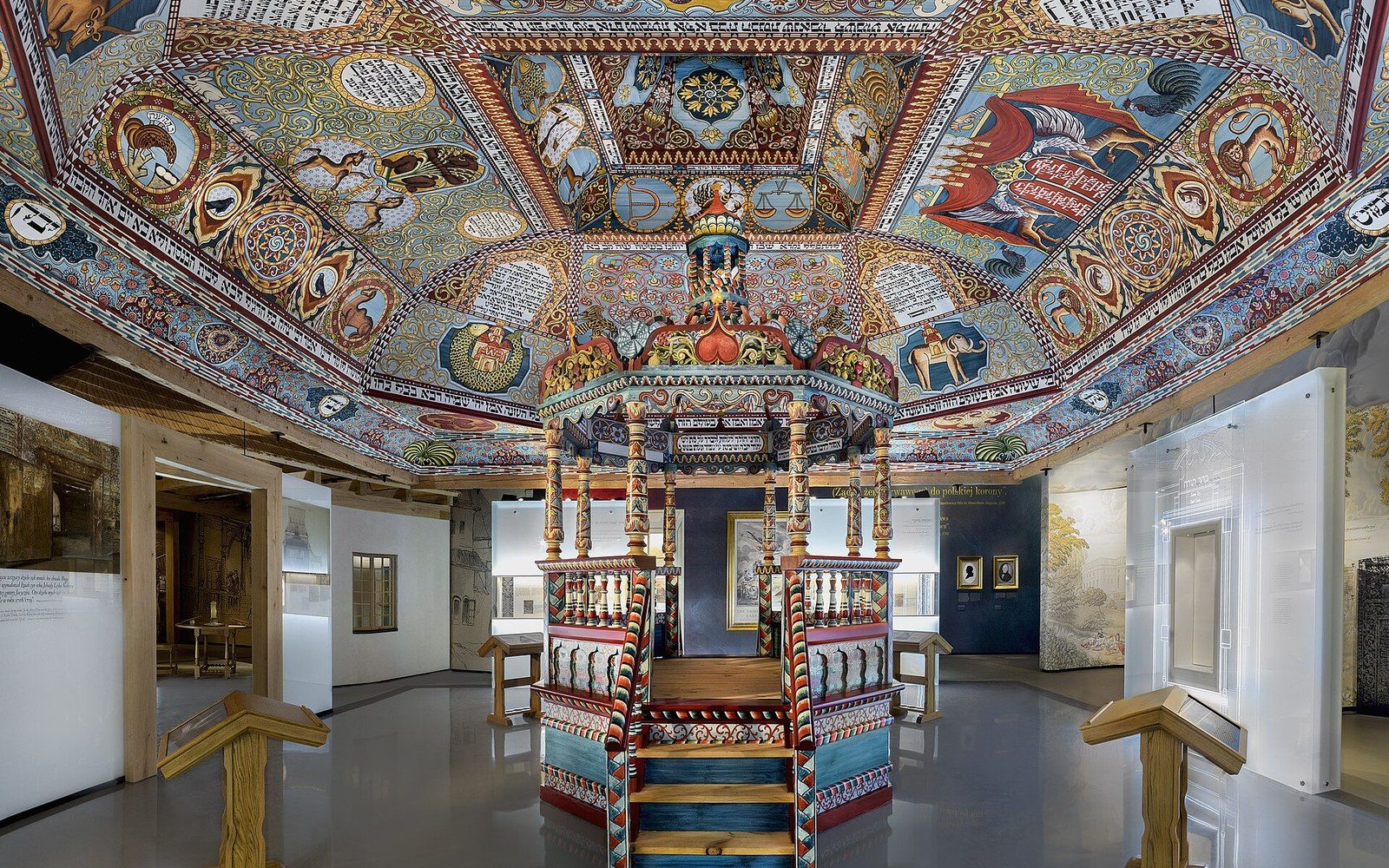
The Zabłudów synagogue, built in the seventeenth century in what is now Podlaskie voivodeship in northeastern Poland, was a log-walled structure of considerable scale. It was destroyed in 1941, as recorded by Yad Vashem and corroborated by the holdings of the YIVO Institute for Jewish Research. The primary physical record of the building survives as a set of measured drawings produced by students of the Warsaw University of Technology during the 1920s — plans, sections, and elevations that document the walls, the roof geometry, and the bimah, the raised central reading platform, at sufficient detail to guide reconstruction. Working from those drawings, Handshouse Studio's reconstruction programme required a workshop environment where historic joinery techniques were understood not just as references but as practice. Sanok provides that environment.
The reconstruction work at Sanok is also consistent with the museum's own research commitments. Timber buildings of the Podlaskie type, log-walled and shingle-roofed, belong to the same broad constructional family as the Carpathian structures already in the collection, even if their decorative registers and liturgical programmes differ. A synagogue is not a tserkva, and Podlaskie is not the Carpathian foothills, but the structural logic — corner-notched logs, pegged joinery, shaped timbers worked with an adze — crosses both traditions. The craftspeople at Sanok recognise the methods, and the museum's infrastructure — its workshops, its timber yards, its conservation staff — is scaled to the work.
For the Zabłudów project, Sanok is not simply a convenient venue. It is an institution whose entire method is the recovery of buildings that would otherwise be gone, one log at a time.